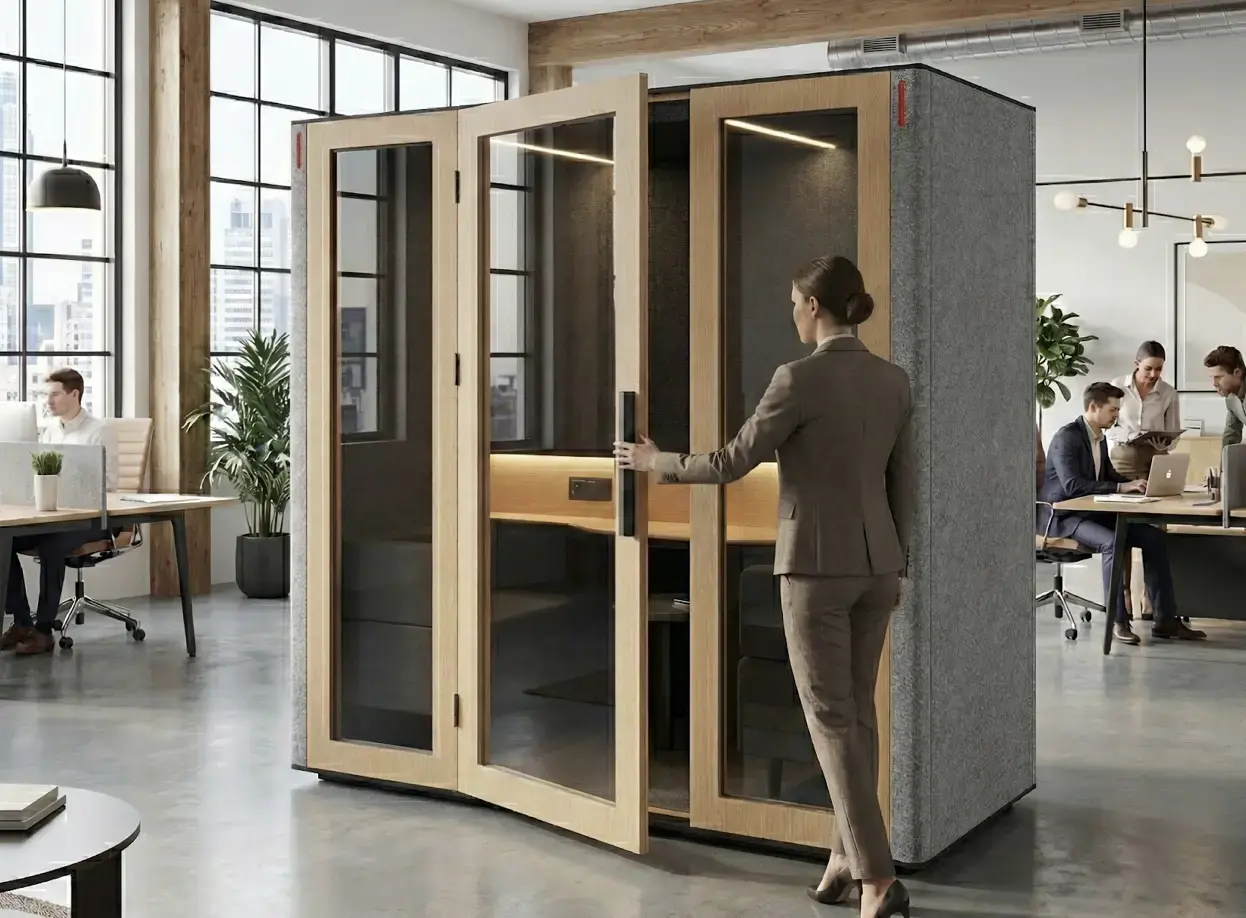
Open-Plan Offices and Mental Health: Why Workplace Design Matters More Than Ever
For years, open-plan offices have been promoted as the future of workplace design.
The idea was simple: remove walls, encourage collaboration, improve communication, and create more dynamic work environments. Open layouts quickly became the standard across industries, particularly as organizations sought more flexible and cost-efficient office spaces.
However, a growing body of workplace research suggests that open-plan offices may come with significant hidden costs — particularly when it comes to employee mental health, workplace wellbeing, and productivity.
As organizations rethink the future of work, the conversation is shifting from how many people fit into an office to how workplace environments affect focus, stress levels, and overall employee experience.
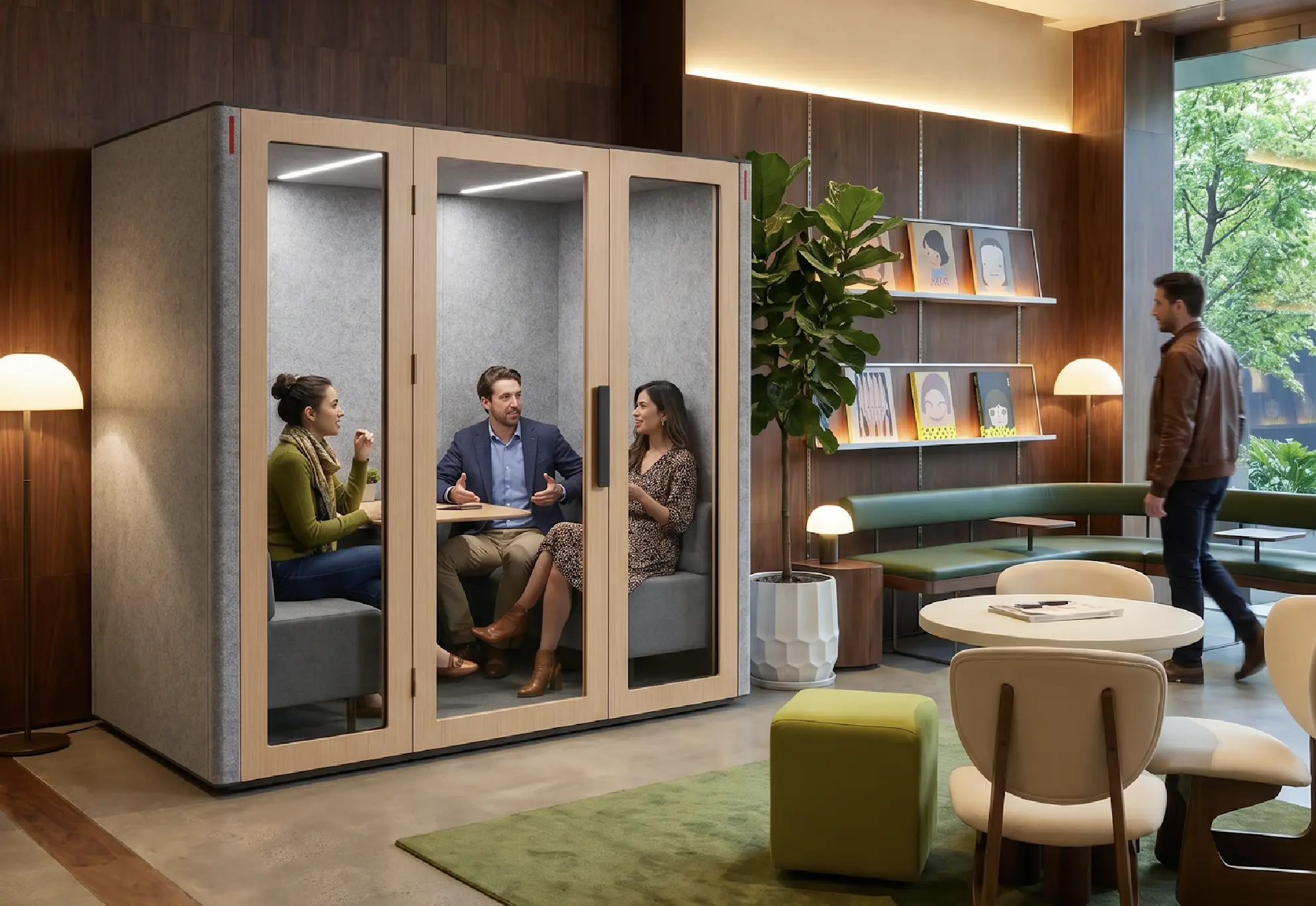
The Psychological Impact of Open-Plan Offices
While open offices can encourage visibility and interaction, they also expose employees to constant sensory stimulation.
Conversations, video calls, keyboard sounds, movement, and visual distractions create an environment where the brain remains in a state of continuous alertness. Over time, this can increase cognitive load and make sustained concentration more difficult.
Research has linked open-plan office environments to higher levels of workplace stress, reduced privacy, lower job satisfaction, and increased mental fatigue. Studies have also shown that noise and interruptions are among the most common complaints reported by employees working in open workspaces.
The challenge is not simply noise itself. It is the lack of control over one's environment.
Why Privacy Has Become a Workplace Priority
Modern work increasingly depends on activities that require deep concentration, problem-solving, decision-making, and virtual communication.
At the same time, employees spend more of their day on video calls, confidential conversations, and focused individual tasks. These activities often conflict with the realities of open office environments.
When employees lack access to private spaces, they frequently experience:
- More interruptions
- Higher stress levels
- Reduced focus
- Increased mental exhaustion
- Lower perceived productivity
Workplace psychology research consistently shows that a sense of control is closely connected to wellbeing and performance. Employees who can choose where and how they work tend to report higher satisfaction and lower stress levels.
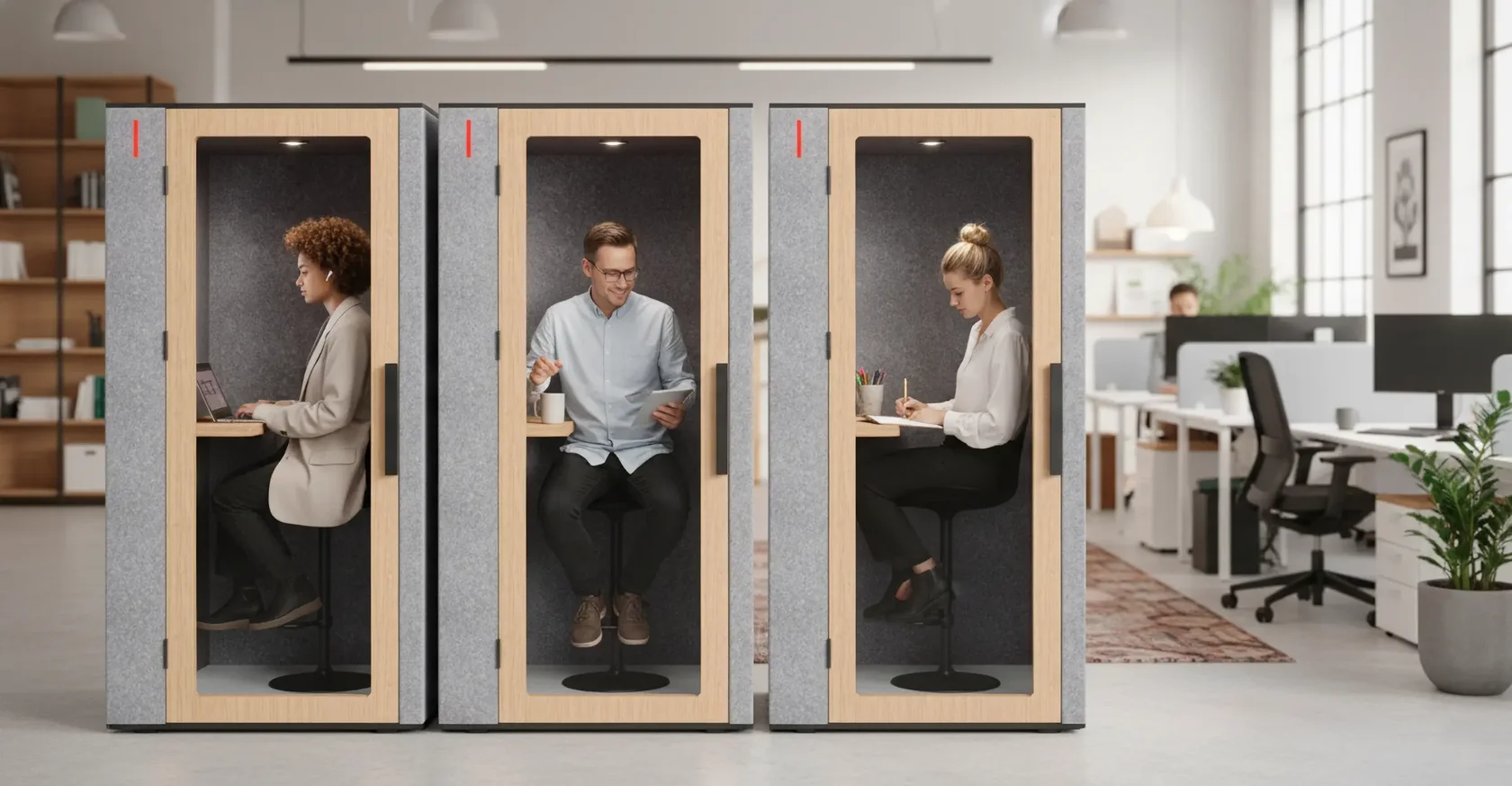
The Noise Problem Is Also a Mental Health Problem
One of the biggest challenges in open-plan offices is acoustic distraction.
Research has found that exposure to office noise can increase physiological stress responses and significantly worsen mood. Even short periods of exposure to distracting workplace sounds have been shown to increase negative emotional responses and stress indicators.
Over time, these daily interruptions create what many workplace experts describe as cognitive overload.
Employees are forced to repeatedly switch attention between tasks, conversations, notifications, and surrounding activity. This constant context-switching consumes mental energy and contributes to workplace fatigue.
In environments where focus is regularly interrupted, productivity becomes harder to sustain and employee wellbeing begins to suffer.
The Future Is Not Closed Offices — It Is Choice
The solution is not necessarily returning to traditional private offices.
Modern workplace strategy increasingly focuses on offering employees a variety of work settings that support different tasks throughout the day.
High-performing offices now combine:
- Collaborative open areas
- Meeting spaces
- Quiet work zones
- Acoustic privacy solutions
- Flexible focus environments
This approach recognizes that different types of work require different types of spaces.
Employees may collaborate in the morning, attend virtual meetings midday, and require uninterrupted focus in the afternoon. A single environment cannot effectively support all of these activities.
Why Acoustic Office Pods Are Becoming Essential
As organizations search for ways to improve workplace wellbeing without major renovations, acoustic office pods have become an increasingly important part of modern office design.
Acoustic booths provide employees with immediate access to private, quiet spaces for focused work, video meetings, confidential conversations, or simply a temporary escape from workplace distractions.
Unlike traditional meeting rooms, acoustic office pods can be installed quickly, adapted as teams grow, and integrated into existing office layouts without construction work.
More importantly, they restore something many open-plan offices struggle to provide: control.
The ability to step into a quieter environment when concentration is needed can significantly improve both productivity and employee experience.
Designing Offices That Support Mental Wellbeing
The future of workplace design is no longer focused solely on collaboration.
Organizations are increasingly recognizing that employee wellbeing, mental health, and workplace performance are deeply connected to the physical environment.
Research continues to show that access to privacy, acoustic comfort, natural light, and flexible work settings has a measurable impact on how employees feel and perform throughout the day.
The most successful offices will not be those that maximize density or visibility. They will be the ones that balance collaboration with focus, connection with privacy, and flexibility with wellbeing.
Because workplace design is no longer just about where people work.
It is increasingly about how people feel while they work.