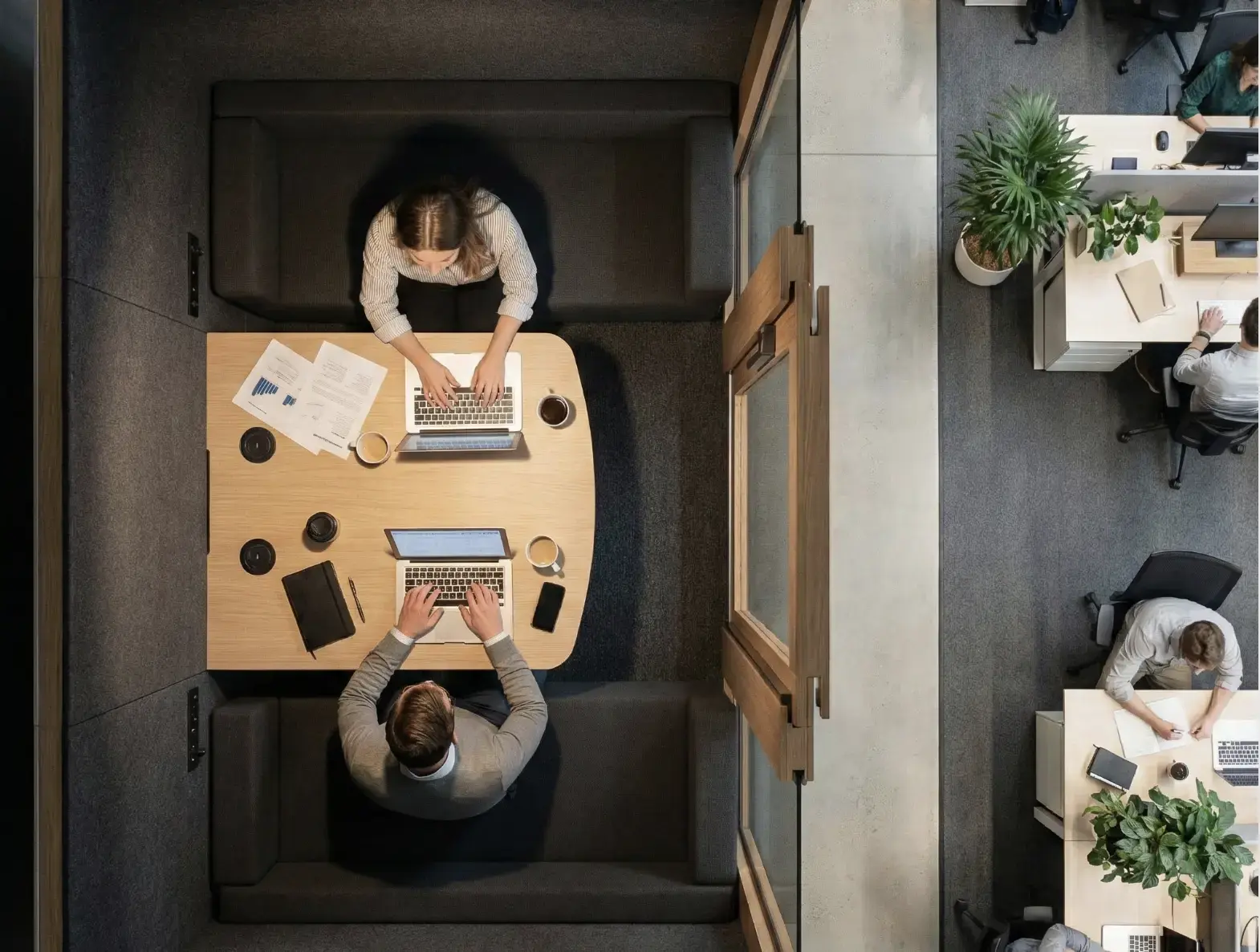
Why Office Noise Is Becoming a Major Workplace Productivity Challenge
The Hidden Cost of Noise in Modern Offices
As organizations continue adapting to hybrid work and modern office design trends, one workplace challenge is becoming impossible to ignore: office noise.
The energy of a busy office can be valuable. Conversations spark collaboration, spontaneous interactions encourage innovation, and shared spaces help teams stay connected. However, the same environment that supports teamwork can also create constant distractions that undermine workplace productivity.
For many employees, excessive office noise has become one of the biggest obstacles to focus, deep work, and overall job satisfaction.
Why Office Noise Impacts Productivity
Noise is more than an inconvenience—it directly affects cognitive performance.
When employees are interrupted by conversations, ringing phones, nearby meetings, or constant movement, their concentration is disrupted. Research consistently shows that recovering from an interruption often takes far longer than the interruption itself. Employees may need several minutes to regain focus and return to peak performance.
As a result, tasks take longer to complete, mistakes become more common, and mental fatigue increases throughout the day. In knowledge-based industries, where problem-solving and concentration are essential, workplace distractions can have a measurable impact on business performance.
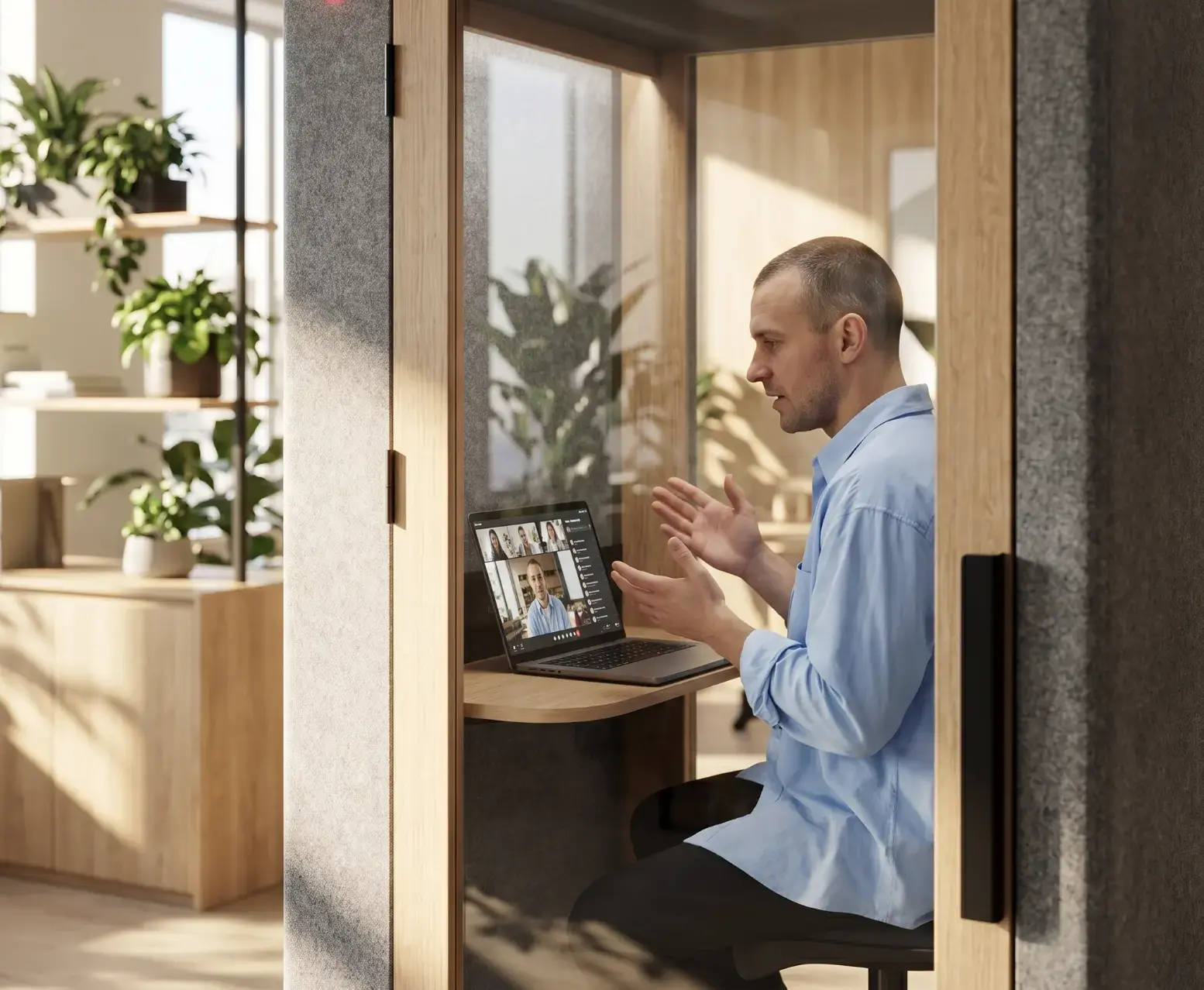
The Link Between Office Noise and Employee Wellbeing
The effects of noise extend beyond productivity.
Constant exposure to distracting environments can elevate stress levels and contribute to mental exhaustion. Employees may feel pressured to extend their working hours simply to complete tasks that were repeatedly interrupted during the day.
Over time, this can lead to lower job satisfaction, higher turnover, and increased burnout risk. As organizations place greater emphasis on employee wellbeing, office acoustics are becoming a key component of workplace strategy rather than simply a facilities concern.
Why Open-Plan Offices Create Acoustic Challenges
Open-plan offices remain popular because they encourage collaboration and efficient use of space. However, they also present significant acoustic challenges.
Hard surfaces such as glass, concrete, and metal reflect sound waves, allowing conversations and background noise to travel across large areas. Without proper acoustic treatment, noise levels can quickly escalate, making it difficult for employees to focus or conduct confidential conversations.
The challenge for modern workplace design is not eliminating collaboration but creating an environment where both interaction and concentration can coexist.
How Organizations Can Reduce Workplace Noise
Improving office acoustics does not require a complete redesign. Many organizations successfully reduce noise through a combination of acoustic treatments, workplace zoning, and flexible workspace solutions.
Acoustic panels and ceiling baffles help absorb sound and reduce reverberation, while upholstered furniture and acoustic screens create more comfortable working environments. These solutions can significantly improve acoustic comfort without changing the overall office layout.
For organizations looking to provide employees with dedicated spaces for focused work and confidential conversations, acoustic office pods have become an increasingly popular option. Unlike traditional meeting rooms, acoustic booths can be installed quickly, require no construction work, and provide immediate access to private, distraction-free spaces.
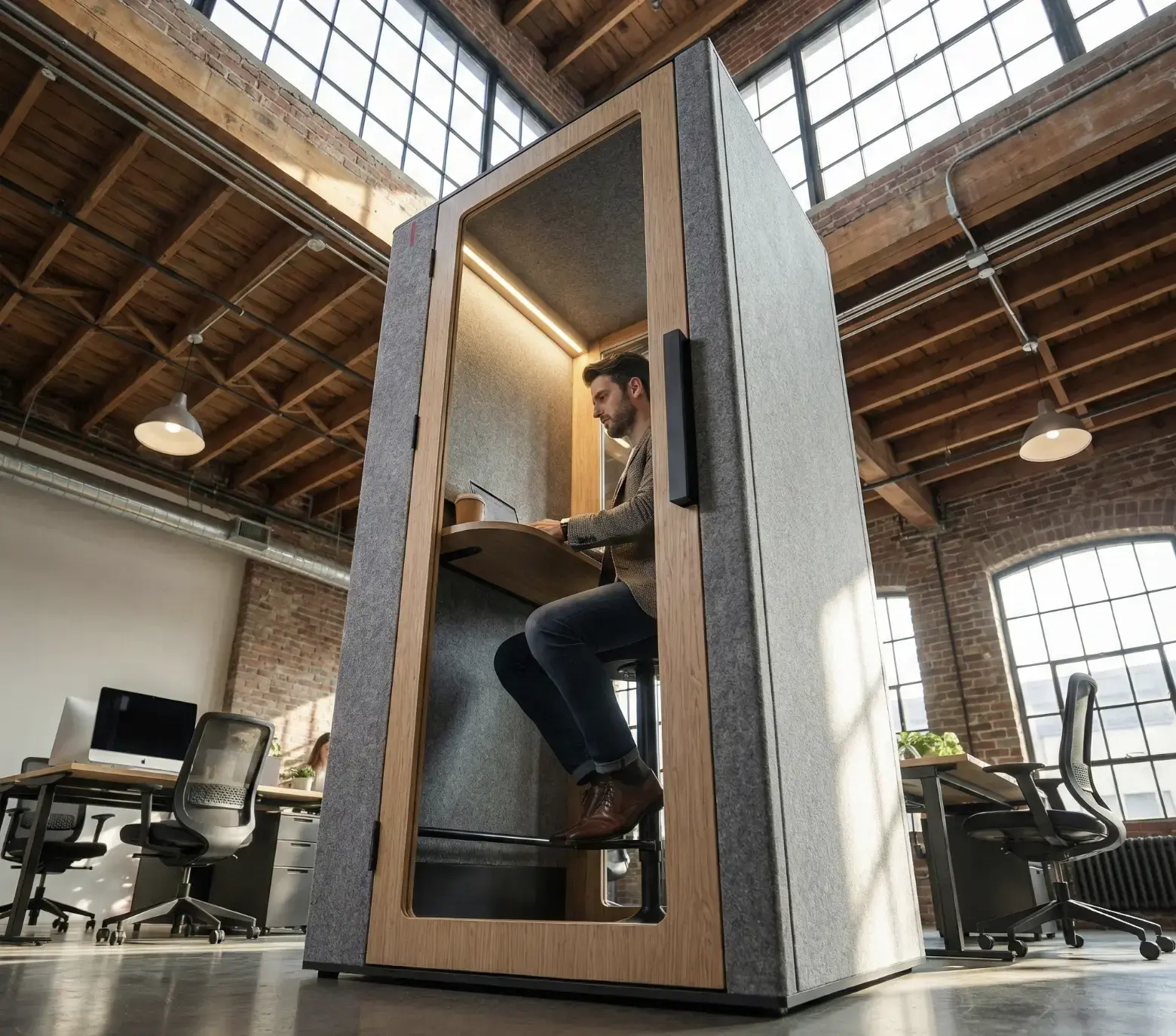
Acoustic Office Pods: A Flexible Solution for Modern Workplaces
As hybrid work becomes the norm, offices must support a wider variety of activities than ever before. Employees frequently move between collaboration, video meetings, focused work, and informal conversations throughout the day.
Acoustic office pods help organizations accommodate these changing needs by creating flexible spaces for concentration and privacy. Whether used for video calls, one-on-one meetings, or deep work sessions, office booths allow employees to step away from distractions without leaving the office environment.
For many companies, acoustic pods have become an essential component of workplace productivity and employee experience strategies.
The Future of Workplace Acoustics
The most successful workplaces are no longer designed solely for collaboration. They are designed for choice.
Employees need spaces that support different work modes throughout the day, from teamwork and brainstorming to focused individual work. Organizations that invest in office acoustics, workplace flexibility, and solutions such as acoustic office pods are better positioned to improve productivity, support employee wellbeing, and create more effective work environments.
Office noise may be a growing challenge, but with thoughtful workplace design and the right acoustic solutions, it can be managed effectively.