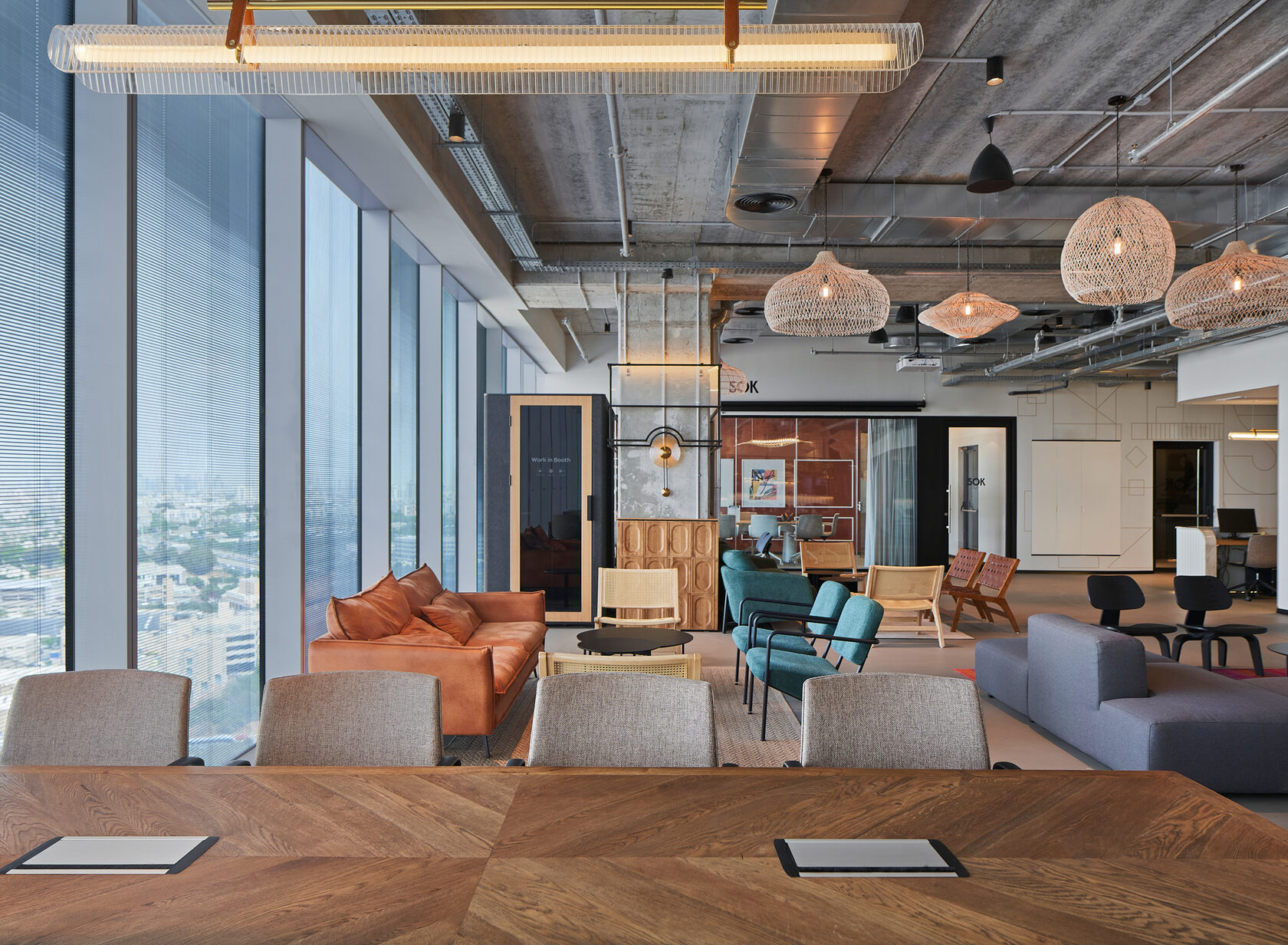
How Office Layout Shapes Productivity, Access, and Workplace Culture
An office floorplan may look like a technical drawing. In reality, it is a behavioral system.
Office layout determines:
- Who gets natural light
- Who has access to quiet
- Who has privacy
- Who gets interrupted
- Who is visible — and who is protected
These spatial decisions shape workplace productivity far more than most policies ever will.
Office Layout Sends Signals — Even When You Don’t Intend It To
Every workplace design contains structure. Even when hierarchy isn’t explicit, space makes it visible. Corner offices. Window desks. Quiet zones. Direct access to meeting rooms. The ability to close a door.
These are not minor details. They become daily signals of:
These are not minor details. They become daily signals of:
- Who can focus without interruption
- Who must constantly adapt
- Who has access to privacy
- Who works in high-traffic zones
Often, this structure is inherited rather than intentional:
- “Leadership needs privacy.”
- “Sales should sit centrally.”
- “Support can sit near the back.”
Over time, the office floorplan becomes a map of access. And access directly impacts performance and employee productivity.
Natural Light Is Not Aesthetic — It Is Cognitive Infrastructure
In modern office design, natural light consistently improves alertness, reduces fatigue, and supports mental recovery.
When daylight is concentrated in one area of the office, well-being becomes unevenly distributed.
When daylight is concentrated in one area of the office, well-being becomes unevenly distributed.
The same applies to:
- Acoustic protection
- Quiet zones
- Personal space
- Ergonomic flexibility
When these conditions are limited to certain roles, productivity differences follow.
The window is not just a view. It is a resource.
The window is not just a view. It is a resource.
Open-Plan Offices Did Not Remove Hierarchy — They Redistributed It
The open-plan office was introduced as a more egalitarian model. No walls. No corner offices. Shared visibility.
But hierarchy does not disappear — it adapts.
But hierarchy does not disappear — it adapts.
In open office layouts, hierarchy shows up as:
- Who controls access to meeting rooms
- Who has a fixed desk versus hot-desking
- Who sits in high-traffic areas
- Who is constantly visible
- Who can take calls privately
Visibility is often framed as transparency. But constant exposure increases cognitive pressure, reduces deep focus time, and fragments attention.
This is where office acoustics and access to acoustic booths or office phone booths become critical.
Office layout becomes operational — not political. It determines who can do deep work and who works in fragments.
This is where office acoustics and access to acoustic booths or office phone booths become critical.
Office layout becomes operational — not political. It determines who can do deep work and who works in fragments.
Circulation Design Directly Affects Workplace Productivity
Office circulation — how people move through space — is often underestimated in workspace planning.
Movement patterns affect:
- Interruption rates
- Noise exposure
- Concentration quality
- Perceived calm or chaos
Who sits along the main corridor?
Who must cross other teams’ zones?
Who works beside social hubs?
Who must cross other teams’ zones?
Who works beside social hubs?
Some offices function like airports — constant motion and ambient noise.
Others feel like libraries — structured movement and defined quiet zones.
Neither is inherently better. But both produce different workplace productivity outcomes.
Others feel like libraries — structured movement and defined quiet zones.
Neither is inherently better. But both produce different workplace productivity outcomes.
Office Layout Often Overrides Workplace Policy
Companies frequently introduce policies such as:
- “Deep work hours”
- “No meeting Fridays”
- “Respect focus time”
But when the office layout contradicts the policy, space usually wins.
If focus areas sit next to collaboration hubs, deep work becomes difficult.
If private rooms are limited, important conversations get delayed.
If private rooms are limited, important conversations get delayed.
If focus areas sit next to collaboration hubs, deep work becomes difficult.
If private rooms are limited, important conversations get delayed.
If private rooms are limited, important conversations get delayed.
This is why flexible office design and hybrid workplace solutions increasingly include acoustic pods and private spaces.
The real power of office design is this: it makes some behaviors easy — and others exhausting.
The real power of office design is this: it makes some behaviors easy — and others exhausting.
From Status Symbol to Performance Infrastructure
A high-performing modern office design treats critical conditions as infrastructure, not rewards.
This includes:
- Distributed daylight access
- Quiet zones available to all
- Privacy not tied to seniority
- Circulation designed to minimize interruptions
- Balanced exposure to traffic flow
Introducing acoustic booths or office pods helps redistribute access to focus and privacy without redesigning the entire space.
When light, quiet, and privacy are shared resources, workplace productivity stabilizes across teams.
When light, quiet, and privacy are shared resources, workplace productivity stabilizes across teams.
The Office Floorplan as a Strategic Performance Tool
If you want to understand how an organization truly operates, do not start with mission statements.
Start with the layout.
Start with the layout.
Ask:
- Who works in the calmest zones?
- Who sits near the busiest paths?
- Who has spatial choice?
- Who constantly adapts?
The most revealing question remains simple:
Who gets the window?
And what does that decision say about how productivity, access, and workplace equity are distributed?
Who gets the window?
And what does that decision say about how productivity, access, and workplace equity are distributed?